Inside the World of Classified Databases
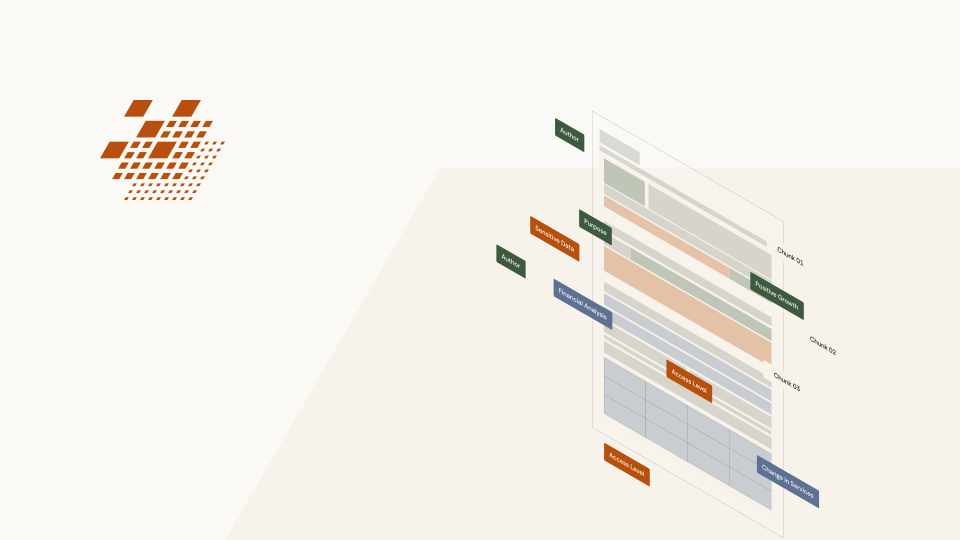
Understanding Classified Databases
Definition and Purpose of Classified Databases
Classified databases are specialized databases that store and manage sensitive information which requires an extra layer of security and confidentiality. These databases are instrumental in industries where data protection and privacy are paramount, such as in government bodies, financial institutions, and healthcare organizations. The purpose of a classified database is not only to store data securely but also to ensure that access to this data is strictly regulated and compliant with relevant legal and regulatory standards. By implementing stringent data control mechanisms, classified databases protect sensitive information from unauthorized access, misuse, or breaches that could have severe legal and reputational repercussions.
The Importance in Regulated Industries: Finance, Healthcare, and Government
In regulated industries, the stakes for data security are exceptionally high. Financial services institutions handle enormous volumes of sensitive financial data which if compromised, could lead to significant financial losses and erosion of customer trust. Similarly, healthcare records contain personal health information that is both highly confidential and sensitive, governed by strict regulations such as
Key Characteristics of Classified Databases
Security Features and Protections
The backbone of classified databases is their robust security features designed to protect sensitive data from both external attacks and internal threats. Key security protocols include multi-factor authentication, strict role-based access control, and end-to-end encryption of data at rest and in transit. These databases are also equipped with advanced anomaly detection systems to flag unauthorized access attempts or irregular activities. Regular security patch updates and vulnerability assessments ensure the database’s resilience against evolving cyber threats, providing a secure repository for sensitive data.
Data Structure and Complexity
Classified databases often feature a complex data structure tailored to support large volumes of structured and
Compliance and Regulatory Standards Met
Compliance is a core aspect of classified databases, especially in heavily regulated industries. These databases are designed to meet specific regulatory requirements such as
Managing Large Volumes of Data in Classified Environments
Techniques for Scalable Data Management
In the realm of classified databases, especially within sectors such as finance, healthcare, and government, managing large volumes of data efficiently is paramount. Techniques such as data virtualization and partitioning are often utilized to enhance scalability and performance. Data virtualization provides a layer that aggregates data from multiple sources, allowing for immediate responsiveness without the need to physical store data in the database. On the other hand, partitioning helps manage large databases by splitting them into smaller, more manageable pieces, without compromising the ability to query data across partitions.
Challenges in Handling Sensitive Data at Scale
Handling sensitive data at scale presents unique challenges, particularly in ensuring
Case Studies: Best Practices in Data Volume Management
An examination of best practices is crucial in understanding how top-tier organizations manage substantial data volumes within classified databases. For instance, a leading financial institution implemented a hybrid
Technological Foundations of Classified Databases
Overview of Database Architecture and Design
The architecture of classified databases is intricately designed to support high security, robust performance, and substantial data volumes. Core components typically include an advanced
Use of AI and Machine Learning in Database Management
The Role of Cloud Solutions in Storage and Accessibility
Cloud solutions play a vital role in the storage and accessibility of classified databases, offering scalable resources and enhanced security measures. Cloud providers typically furnish advanced security features, including comprehensive access controls, encryption-at-rest, and regular security audits, all crucial for safeguarding sensitive data. Moreover, the scalability of cloud solutions allows organizations to adjust resources based on fluctuating data needs, ensuring cost-efficiency without compromising performance or security.In these sections, we highlight the advanced techniques and technologies that underpin the operational success of classified databases in regulated environments, addressing both challenges and innovations in data management and technological infrastructures.
Deployment of Advanced Security Protocols
Encrypted Storage and Transmission
In the realm of classified databases, safeguarding sensitive information is paramount. A critical aspect of this protection is the encryption of both storage and transmission of data. Encryption acts as the first line of defense against unauthorized access, ensuring that even if data is intercepted, it remains indecipherable without the proper decryption keys. Advanced encryption standards such as AES (Advanced Encryption Standard) are commonly employed, alongside TLS (Transport Layer Security) for secure data transmission. These technologies are indispensable in maintaining the integrity and confidentiality of classified information across various sectors, including financial services and government agencies.
Regular Security Audits and Compliance Checks
To maintain a robust security posture, classified databases are subjected to regular security audits and compliance checks. These audits are designed to identify vulnerabilities that could potentially be exploited by cyber threats. Compliance checks ensure that databases not only meet but exceed regulatory standards set by government bodies such as
Addressing Cyber Threats and Vulnerabilities
As the cyber landscape evolves, so too does the nature of threats and vulnerabilities. Classified databases must be proactive in their approach to cyber security, implementing layers of defenses such as intrusion detection systems (IDS), firewalls, and anti-malware tools. Moreover, regular updates and patches are applied to safeguard against newly discovered exploits. By maintaining a vigilant stance and employing a comprehensive cybersecurity strategy, organizations can protect their classified databases from potential breaches that could lead to severe data loss or exposure.
Integration of GenAI and LLM into Classified Database Systems
Use Cases of AI in Enhancing Database Functionality
The integration of General AI (
Improving Data Retrieval and Analysis with AI
The Future of AI in Database Management
Looking ahead, the role of AI in database management is set to expand further. Future enhancements may include more advanced predictive analytics, real-time data processing, and increased customization of AI algorithms to specific industry needs. These advancements will not only improve the accuracy and speed of data handling but also drive significant operational efficiencies in regulated industries. Furthermore, as AI becomes more ingrained in classified database systems, ongoing research and development are expected to unlock new potentials for innovation and security in data management strategies.
The Role of Unstructured Data in Classified Databases
Managing and Analyzing Unstructured Data
In the realm of classified databases, unstructured data—ranging from emails and images to text documents and videos—presents unique challenges and opportunities. Managing this data involves not only efficient storage solutions but also advanced mechanisms for indexing, searching, and retrieving data efficiently. Tools like Elasticsearch and
Technologies for Efficient Unstructured Data Integration
Integrating unstructured data into classified databases necessitates the implementation of robust data integration tools and middleware solutions that can handle diverse data types and formats seamlessly. ETL (Extract, Transform, Load) frameworks, along with more modern data integration platforms like Talend and Informatica, play a crucial role here. These technologies not only simplify the integration of complex data into a centralized repository but also ensure that
Case Studies: Success Stories of Unstructured Data Use
Several enterprises in regulated industries have successfully harnessed the power of unstructured data while maintaining the sanctity of their classified databases. For example, in the healthcare sector, machine learning models have been utilized to analyze unstructured patient data and medical records to improve diagnostic accuracy and treatment effectiveness. Similarly, in the finance industry, unstructured data from news articles, financial reports, and customer communications has been integrated into risk assessment models to enhance decision-making processes and regulatory compliance.These case studies underline not only the technical feasibility of managing unstructured data in secure environments but also the tangible business benefits derived from this practice.
Legal and Ethical Considerations
Navigating the Legal Landscape
The management of classified databases, especially those containing sensitive or personal information, is heavily regulated. Entities managing such databases must comply with a multitude of data protection laws, such as the
Ethical Implications of Data Usage in Sensitive Environments
Besides legal requirements, enterprises must consider the ethical implications of handling potentially sensitive data stored in classified databases. Issues such as data consent, privacy invasion, and bias in data handling and analysis are of significant concern. Organizations are hence advised to develop and adhere to ethical guidelines that not only meet regulatory standards but also build trust with stakeholders and the public by ensuring transparent and fair data practices.
Future Legal Trends Affecting Classified Databases
Looking ahead, legal standards concerning data privacy and security are expected to become more stringent and complex. Additionally, upcoming regulations are likely to place increased emphasis on cross-border data transfer restrictions and the ethical use of
Discover the Future of Data Governance with Deasie
Elevate your team's data governance capabilities with