Enhancing Data Integrity: The Link Between Data Governance and Quality
When we talk about the backbone of effective
Understanding the Bond Between Data Governance and Data Quality
To kick things off, let's break down how data governance influences data quality directly. Data governance entails the overarching management of data's availability, usability, integrity, and security, mainly managed through policies, procedures, and plans. Data quality, however, is more about the data's condition—its accuracy, consistency, completeness, reliability, and whether it can be trusted for making decisions.
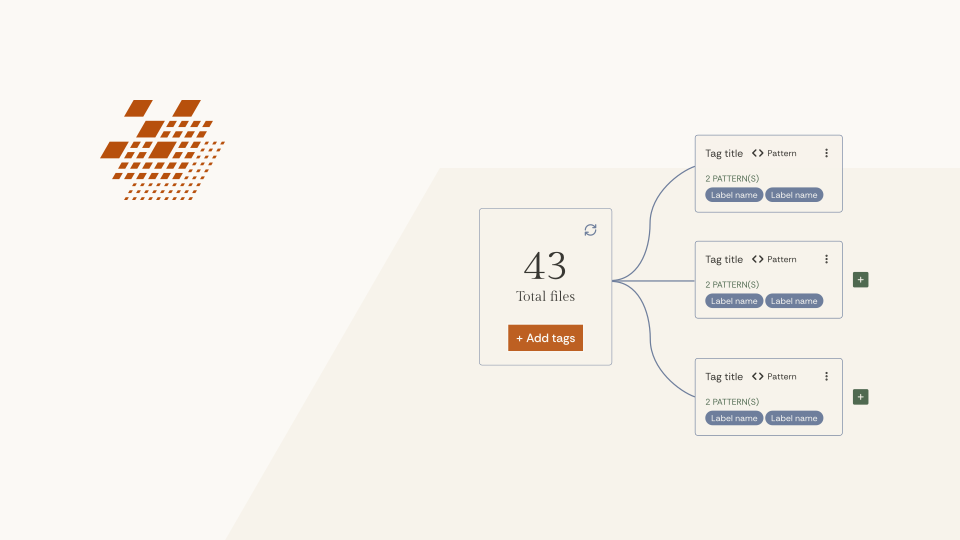
Use a Data Catalog to Improve Data Discoverability and Quality
Actionable step: Implement a data catalog to ensure that data across your organization is classified, indexed, and stored with
Automate Data Accuracy Checks with Machine Learning
Actionable step: Leverage machine learning algorithms to continuously monitor and verify the accuracy of data. For example, a financial institution could use AI to detect and correct discrepancies in real-time transaction data, ensuring all transactional information aligns with regulatory requirements and internal records.
Strategizing for Data Quality with Robust Data Governance Frameworks
A solid strategy connects the dots between data governance and quality, aligning goals across the board and ensuring they meet compliance and business intelligence needs. This strategy is about creating frameworks that can adapt and scale depending on the needs of the business.
Implementing Tiered Data Quality Metrics
Actionable step: Develop and employ tiered data quality metrics that align with different levels of data governance rules. For a company that deals with varying types of data, such as a retail company with both customer and supplier information, tiered metrics help prioritize governance resources where they are most needed, ensuring quality is maintained across the board.
Discover the Future of Data Governance with Deasie
Elevate your team's data governance capabilities with